Thanksgiving 2026: A Time of Reconciliation
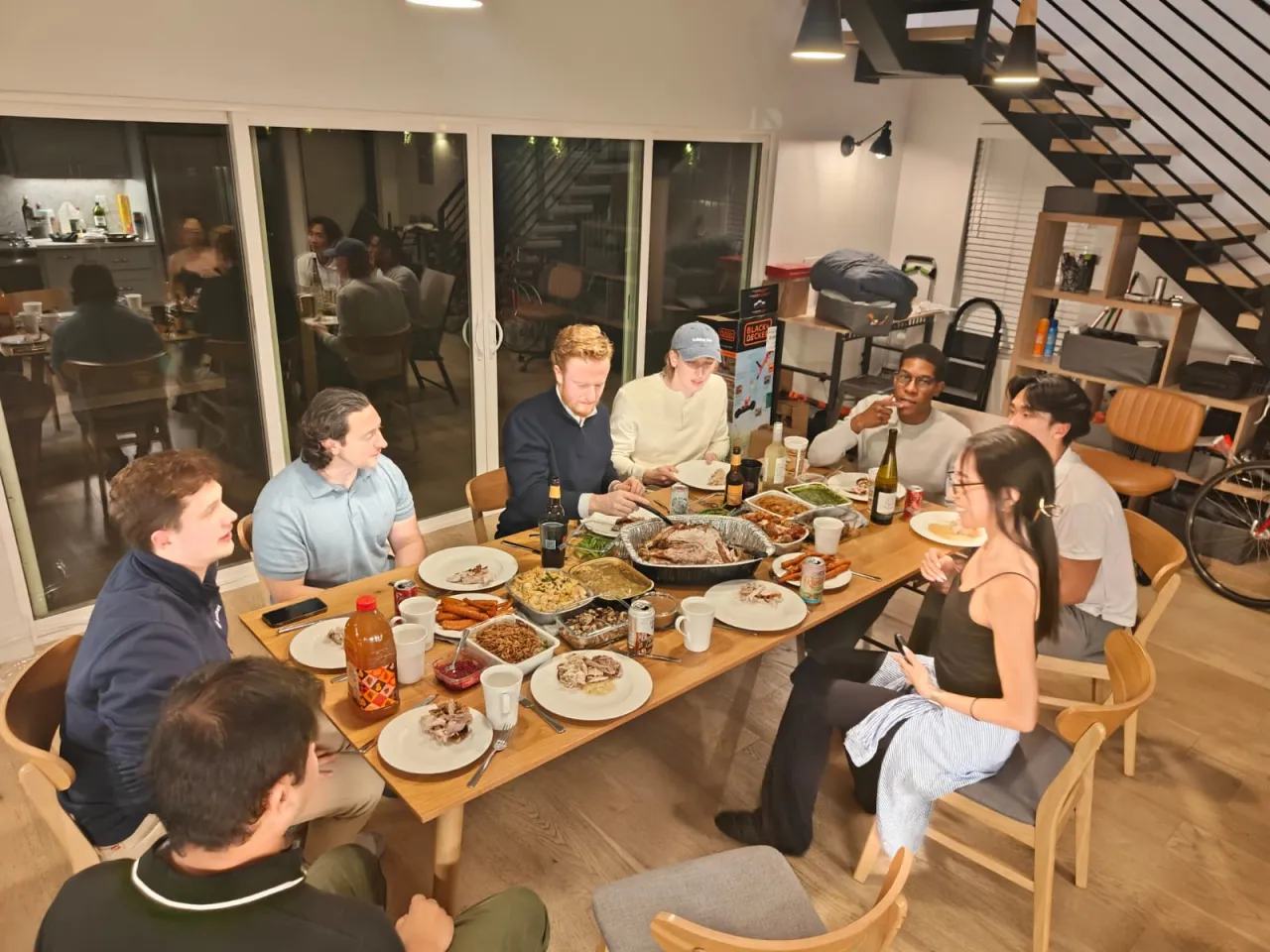

This Thanksgiving is quieter at Zeta House. We haven't hosted a large public Friendsgiving like we did in previous years, but the occasion gives us a chance to reflect on the people, the place, and the work that goes into keeping a community going.
Zeta House began as an experiment in coliving and coworking in East Austin: a home where people could pursue their own work while sharing space, ideas, and occasionally a meal. Two years on, we're still learning what it takes to make that kind of place last.
Our first Friendsgiving brought residents, neighbors, and friends together around a table. At Friendsgiving in 2025, we introduced the Protocol Embassy and began asking what more a shared physical place could make possible. This year, we found ourselves looking more closely at the foundations: how we live together, how the house operates, and how we care for what we have already built.
We're calling this a time of reconciliation. Not because everything needs to go back to the way it was, but because experience gives us a chance to bring our ideas closer to reality. Sometimes that means repairing something. Sometimes it means changing an arrangement that isn't working. And sometimes it simply means appreciating what people contributed, even after they have moved on.
A community that has room to be human
People come to Zeta House for different reasons. Some are new to Austin and want a place to land. Some are building a company, working remotely, or figuring out what comes next. Others are looking for the opportunity to meet people while still having a room of their own and the freedom to get on with their lives.
That variety is part of the point. We can provide a shared kitchen, a coworking space, and opportunities to meet, but we can't manufacture friendship. Some of the best parts of living together happen between planned events: a conversation over dinner, a question asked across the office, or someone sharing what they know with another resident. A community can be cultivated, but it can't be commanded.
This year also made us rethink some of our assumptions about stewardship. In our Community Steward Blueprint, we argued that a steward needed to live at the house. The experience since then has shown us that combining residence, work, friendship, and responsibility in one role can be more complicated than we expected. We're exploring clearer ways to coordinate the work of caring for the house, with defined responsibilities, good communication, and help from people with different skills.
That doesn't make the human side less important. It gives it room to breathe. Clear expectations and respect for privacy make it easier for people to share a home without having to negotiate every boundary from scratch.
In our first-year reflection, we wrote about friction as part of community. We still believe that living alongside people with different experiences can challenge and expand our perspectives. But not all friction is useful. A good disagreement can help us learn; the same unresolved practical problem week after week just wears people down. Part of building a durable community is learning the difference.
The work between gatherings
There was plenty to celebrate this year. Our Mardi Gras gathering brought jazz, food, and friends to the house. Those moments matter. So does the less visible work that makes a welcoming place possible on all the other days.
This year that work included looking after doors, cooling, cleaning, and the landscape. Shortly before Thanksgiving, irrigation problems prompted us to reconsider the water and labor needed to maintain the front lawn, including working with crushed limestone. It wasn't just a matter of making a repair; it was an opportunity to ask whether the old arrangement was the best one for the place and its climate.
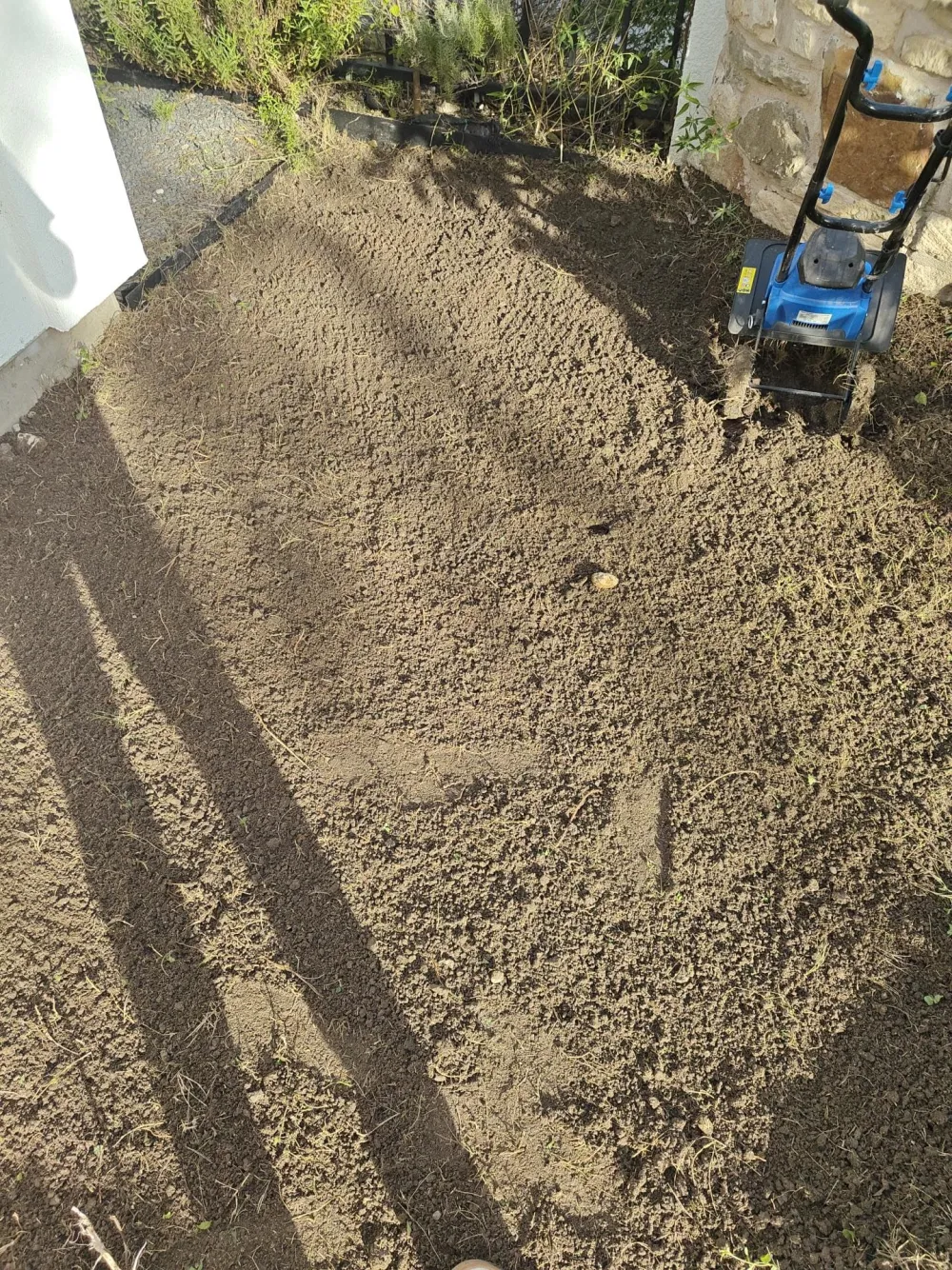
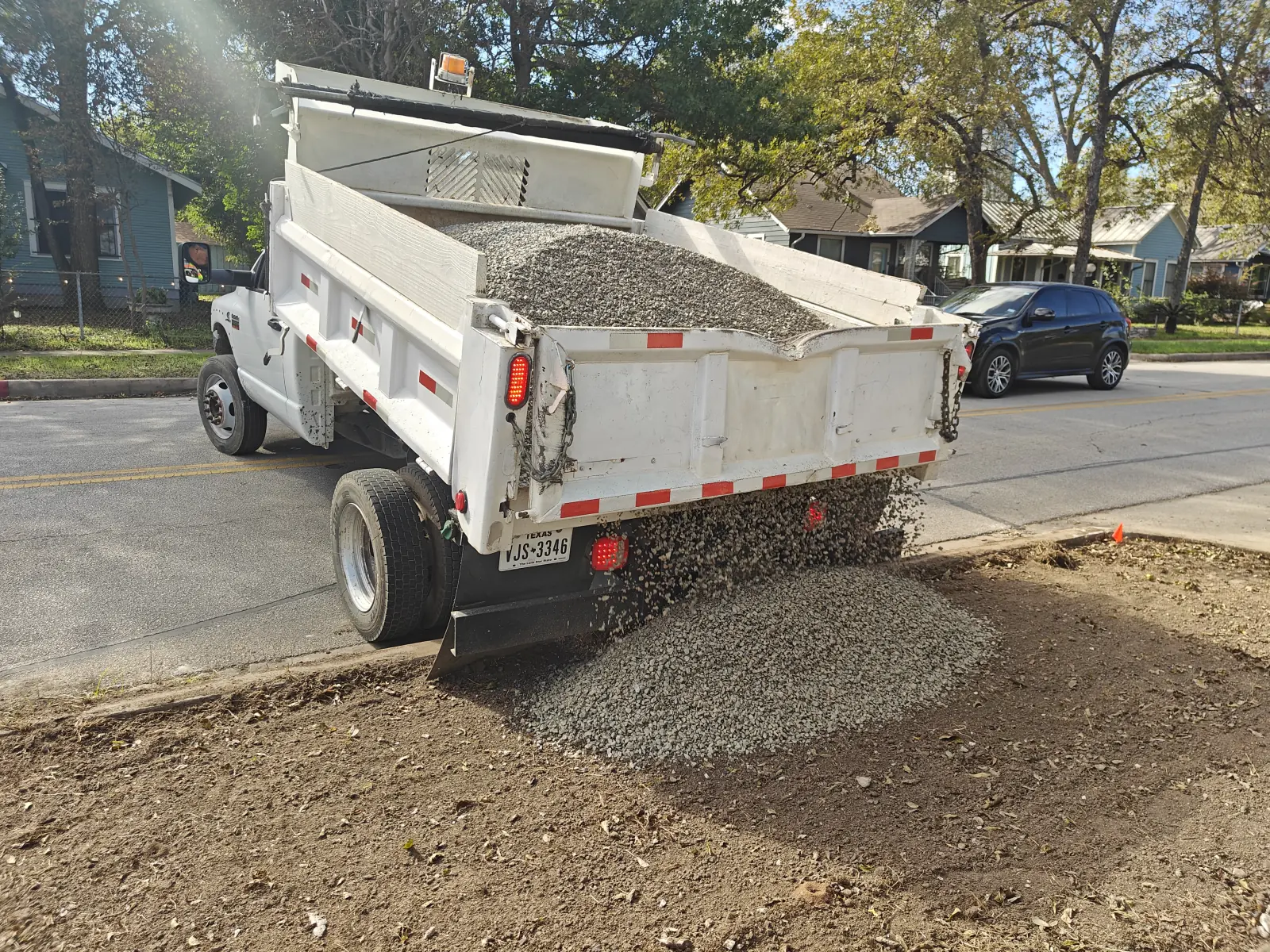
Every improvement comes with a future responsibility to maintain it. We've come to appreciate the people who do that work: cleaners, tradespeople, neighbors, and local workers who bring practical knowledge to problems that a plan alone can't solve. A house is not sustained by its original construction. It is sustained by people paying attention to it over time.
The same is true economically. Sharing space and equipment gives residents access to things that might be harder to sustain alone. The house, in turn, depends on utilities, supplies, and the work of people throughout Austin. We've had to ask not just what we can build, but what we can afford to care for over time.
What would it mean to build another?
The work of looking after one house has made us think differently about what it would take to operate another. A small house might not be able to support a full-time operator on its own, but could several nearby properties support a local business that helps care for them? We began looking at household management and franchise models, and at the different ways they bring together property, capital, practical knowledge, and people willing to take responsibility.
That led to a different question: would another Zeta House need to look and operate like this one? A franchise can share a name and a way of doing things; a federation might connect independent operators with different approaches. Nearby houses could share suppliers and maintenance, but they might also compete for the same residents. More distant places might offer different opportunities, while being too far apart to share the same local services. What should be shared, and what should each place be free to discover for itself?
We once received an offer to exchange referrals with another accommodation operator. In principle, one house could refer someone it cannot accommodate to another: the resident finds a room, the receiving house earns rent, and the referral or shared coordination could be funded through an agreed fee. But what if both houses are full when demand is high, and both have vacancies when it is low? A network does not create demand just by listing more rooms, and an empty room-night cannot be saved for next month. Perhaps the opportunity is not just to replicate the same house, but to connect places with different communities, capabilities, and reasons for people to visit.
In Go, a stone's value depends in part on how it supports the others. We've been wondering whether something similar applies to physical places. Another house needs more than a building: it needs an operator, capital, local relationships, and people who want to be there. Could commitments among owners, operators, investors, and residents help bring those resources together before a new place is built? The question is how to make each place more viable, rather than simply adding more capacity to the same market.
A stay at a coliving house can help someone find their feet in a new city, and they may eventually move on to a different home. That can be a success for the resident, while leaving the house dependent on new people finding their way there. What activities might create continuing reasons for people to connect, visit, and return, while leaving room for the continuity that longer-term residents bring?
Beyond the software
These questions also changed how we think about Zeta House Docs, the software we're developing to help operate the house. It is our effort to give coordination within Zeta House a clearer structure: how people, agreements, responsibilities, and the work of running the house fit together. The starting point is the relationships and practical needs we already have, not a future network. One small glimpse of that work is a passkey sign-in screen, part of making the system usable for the people involved.
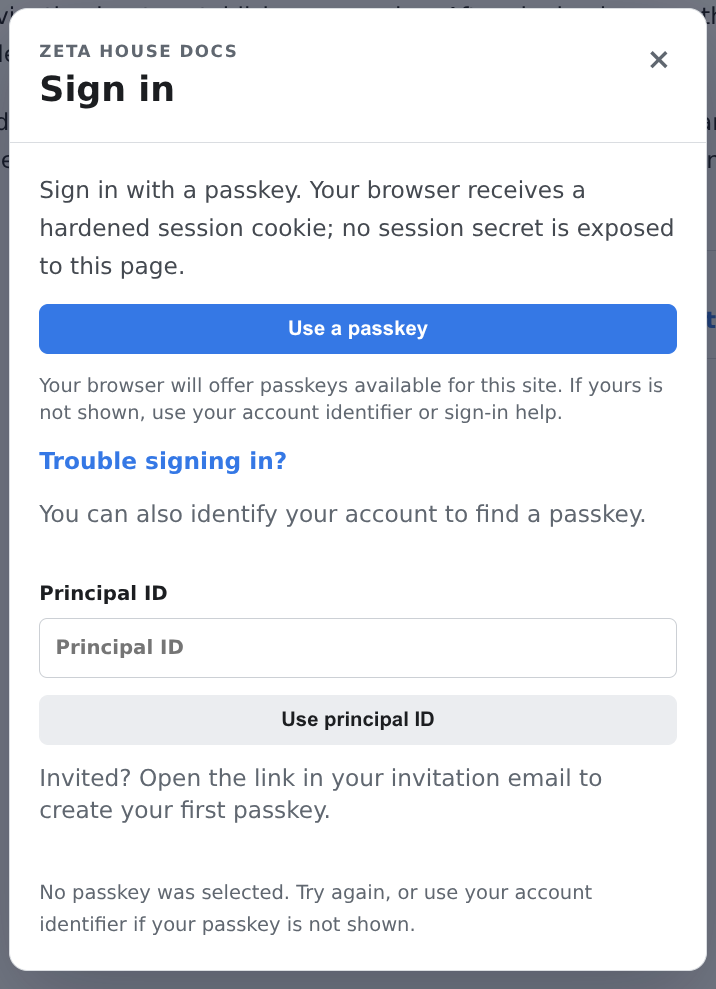
That work has also raised a question: as AI makes it easier to create software, what would make a shared system worth participating in? A program can show an available room, but it cannot by itself create the room, find someone who wants it, or ensure that a commitment will be honored.
We've seen a version of this problem in some blockchain projects: there can be plenty of technology for coordination without enough meaningful activity to coordinate. Operating a house encourages us to start from the other direction. Residents need places to live; operators need dependable work and suppliers; investors take risks, and buildings need care. Could shared tools help people make and honor useful commitments across those relationships?
Independent operators might choose to use different software while agreeing on how to exchange information and commitments. But compatibility alone would not make a network valuable. Participants would need reasons to work together, trust in one another, and a fair way to fund shared work, including developing and maintaining the software. How could such an arrangement support private initiative without letting people take the benefits of shared work without contributing? And how could it establish trust without becoming another gatekeeper?
Even open protocols do not settle those questions. While working on email for Zeta House Docs, we found that the rules and implementations of different providers affected what we could actually do. It made us ask whether a shared system can make participation more dependable without unnecessarily limiting the freedom to choose and change tools.
For residents, the immediate question is simpler: can they find a welcoming place with clear expectations? For an operator, it might be whether the work is sustainable; for someone providing capital, whether the investment can be maintained. We don't yet know which arrangements best serve all three. But the Protocol Embassy gives us a way to explore those questions alongside the people and practical constraints that bring them to life. The house remains first a place to live and work, whether or not a resident takes part in those explorations.
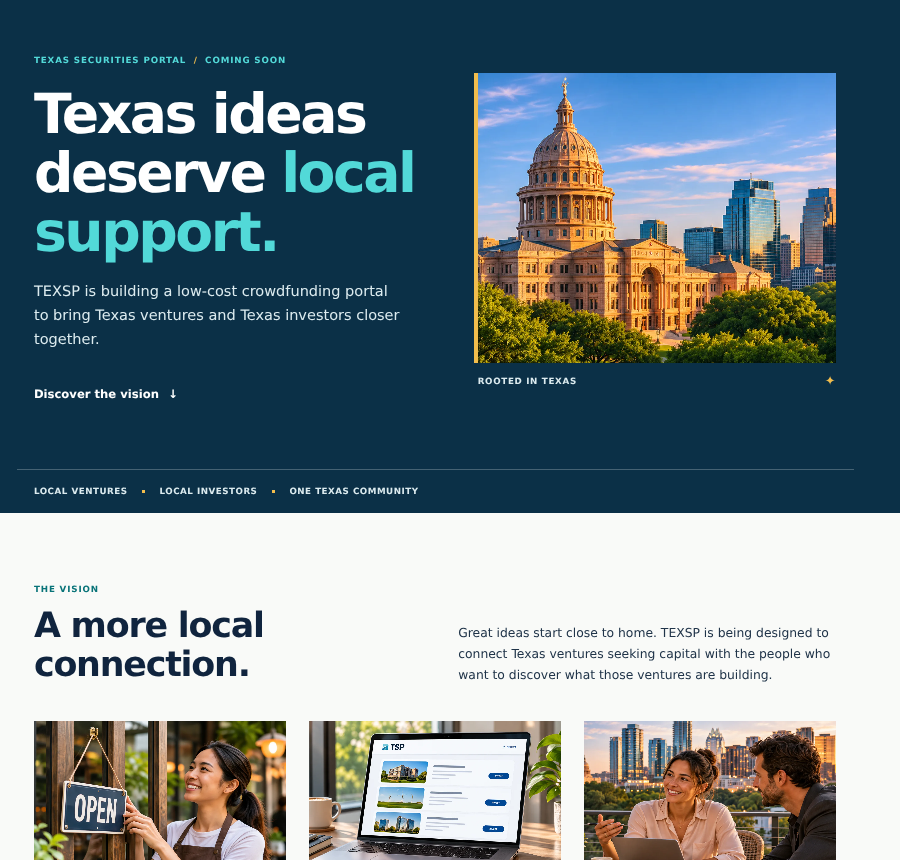
We're also exploring ways to bring Texas entrepreneurs and local capital closer together, making it easier for local ventures seeking capital to connect with people who want to support them. It's early days, but we look forward to sharing more when the time is right.
Gratitude and renewal
This Thanksgiving, we're grateful to everyone who has been part of Zeta House: current and former residents, stewards, friends, musicians, neighbors, and the people whose work keeps the house running. Not every chapter lasts forever, and not every experiment goes according to plan. That doesn't make the connections or contributions any less meaningful.
In 2024, we brought people together. In 2025, we explored more of what we could build together. In 2026, caring for the house led us to question some of our assumptions about community, technology, and growth. We don't have all the answers, but we're grateful to have a place in Austin where we can keep learning from the work and from one another.
If you're looking for a place to live and work in East Austin, you can learn more about our rooms and membership options.
Happy Thanksgiving from Zeta House.